Montenegro: Why Is the Country Called Montenegro?
In short: Montenegro and Crna Gora refer to the same Balkan country. The name is usually understood as “Black Mountain” or “Land of the Black Mountains.” In the region, locals say Crna Gora, while in English and international travel materials the standard form is Montenegro. The best-known explanation connects the name with Mount Lovćen: its slopes were once covered with dense dark conifer forests, so from a distance the mountain range could appear almost black. On travel websites, in hotels, restaurants, and brochures, the word Montenegro is used most often, while many visitors also know the country through the local form Crna Gora. To start planning a trip, see Montenegro on the main destination page.
Montenegro or Crna Gora: which name is correct?
All these names describe one and the same country. Montenegro is the international and English version, while Crna Gora is the local Balkan name. In tourism, both are correct, but Montenegro is the form travelers will see most often in booking systems, route descriptions, and excursion programs.
| Name | Where it is used | Meaning |
|---|---|---|
| Montenegro | English and international name of the country | Black mountains |
| Crna Gora | Local Balkan name | Black mountain / black mountains |
| Montenegro | Tourism, hotels, guides, international materials | Black mountains |
If you come across alternative spellings in searches or casual speech, they are usually just informal variants. In official travel content, the correct forms are Montenegro and Crna Gora.
What does the name Montenegro mean?
The name is commonly translated as “Land of the Black Mountains” or simply “Black Mountains.” This interpretation suits the country perfectly: a large part of Montenegro is mountainous, and many slopes were historically covered with dark forests. Seen from afar, especially in certain light, the ridges could look much darker than they do up close.
The explanation is most often linked to Lovćen. Today this mountain remains one of the key symbols of the country, and travelers interested in its landscapes, viewpoints, and history can read more about Lovcen - park, Njegos mausoleum and mountain. Montenegro.
History of the name Montenegro
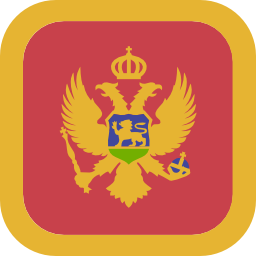
The earliest mentions of Crna gora date back to 1926 in the source tradition referenced here. One of the first known mentions appears in a charter associated with the Serbian king Stefan Uroš II Milutin. At that time, Crna Gora referred to an area near Skadar Lake, around Vranjina and Crmnica. Interestingly, medieval Serbia had several regions with similar names.
In Italian sources from around the late 14th century, the territory appears under different forms such as Cerna gora, Montana negra, and Montenegro. Over the centuries, these lands passed through many historical periods and names. In older descriptions you may also encounter Duklja, Zeta, and Yugoslavia. For modern travelers, however, the clearest names are Montenegro internationally and Crna Gora locally.
If you want to include the country’s most scenic historical and natural areas in one route, it is worth browsing the catalog of tours and trips around Montenegro.
The legend of Venetian merchants and Mount Lovćen
Alongside historical explanations, there is also a beautiful legend. Venetian merchants were sailing past the Montenegrin coast and noticed a high mountain inland. From the sea, its summit looked completely dark because the slopes were densely covered with pines. The time of day may also have played a role, making Lovćen appear even darker in the changing light.
According to the legend, the merchants were so impressed by the view that they called the area the “Land of the Black Mountains.” No one can say with certainty whether this is exactly how the name spread, but Venice had major influence in the region, and the form Montenegro became firmly established in non-Slavic languages.
Mount Lovćen on the map
Lovćen is one of the main places associated with the origin of the country’s name. Below is a map showing the mountain.
Montenegro on the map
Montenegro is located in Europe, on the Balkan Peninsula. Looking at the map helps explain why mountains are so important to the country’s image, identity, and even its name.
Mountains of Montenegro
Much of Montenegro is covered by mountain ranges, and they are remarkably diverse. Some slopes are blanketed with old pine forests, while others are rocky and almost bare. In some regions the landscape is cut by canyons, caves, and dramatic cliffs. Most of the country lies within the Dinaric Alps. Along the southeastern border stretch the North Albanian Alps, also known as Prokletije, while karst plateaus dominate parts of the southwest.
Durmitor and Bobotov Kuk
One of Montenegro’s best-known high peaks is Bobotov Kuk in the Durmitor massif, with an elevation of about 2552 m above sea level. Interestingly, it is not the only summit considered among the country’s highest. Both Durmitor and Prokletije have peaks that compete for this title, and exact figures may vary depending on the measuring method and whether the summit lies directly on the state border with Albania.
Travelers who want to explore this region in more depth can check Durmitor - reserve of Montenegro and its national park, as well as nearby highlights such as Black Lake Montenegro: on the map and how to get there and Tara Canyon, Montenegro. On the map and how to get there.
Tourism in Montenegro
Montenegro remains one of the most convenient destinations in the Balkans for a beach-and-mountains holiday. Travelers choose it for its sense of safety, comfortable resort infrastructure, scenic roads, and generally moderate prices compared with many other European coastal destinations. The euro is used in everyday payments, accommodation can be booked online, and there is a wide choice of apartments, hotels, and villas.
The country is compact, which makes it easy to combine the coast with mountain excursions, old towns, monasteries, bays, and national parks in one trip. Guided routes are especially popular because in a short time you can see much more than by staying in one resort only. If you are comparing options, you can see trip options around the country.
Montenegro has both paid and free beaches. In peak summer, the coast can be busy, while in October there is usually more space and more free sunbeds. By November, accommodation, food, and entertainment prices may become even more attractive for travelers who prefer a quieter season.
What to see in Montenegro
Montenegro offers a wide variety of attractions. Nature lovers usually come for:
- mountain peaks and panoramic roads;
- old pine forests;
- bays and coastal viewpoints;
- lakes and national parks.
Those interested in history and culture often choose:
- medieval towns;
- Orthodox monasteries;
- historic churches and fortifications.
Among the most famous places are the Bay of Kotor, the old streets of Kotor, Skadar Lake, Cetinje, and mountain villages near Lovćen. For inspiration, see Boka Kotor Bay - Montenegro and its best places, Kotor Montenegro: sights of the old town, and Skadar Lake, Montenegro | Description and How to Get There.
Where to go for a holiday in Montenegro?
Montenegro has many resort areas, and each one suits a different style of vacation.
- Budva — a lively coastal city with beaches, architecture, restaurants, shops, and a wide choice of accommodation.
- Becici — known for its sandy shoreline and comfortable hotels, ideal for a classic beach stay.
- Tivat — a modern town close to the airport, convenient for short breaks and easy transfers.
- Kotor — a beautiful medieval town for travelers who love history, old streets, and atmospheric views.
Petrovac, Herceg Novi, Sveti Stefan, and Rafailovici are also popular with visitors.
Comparison of popular holiday destinations
| Place | What makes it special | Best for |
|---|---|---|
| Budva | Beaches, architecture, accommodation, restaurants, and shops | Travelers who want both the sea and full urban infrastructure |
| Becici | Sandy coast and comfortable hotels | Those focused on a beach holiday |
| Tivat | Location close to the airport | Visitors who value easy logistics |
| Kotor | Medieval town and historic atmosphere | Lovers of history and old towns |
How to get to Montenegro
There are several practical ways to reach Montenegro, depending on your route and budget.
| Method | How it works | Feature |
|---|---|---|
| Plane | You can fly to Podgorica or Tivat | The most convenient option for most tourists |
| Train | Usually via Belgrade, then onward from Serbia to Montenegro, preferably to Podgorica | Suitable for routes built through Serbia |
| Bus or taxi | From Podgorica you can continue to almost any town | A practical way to move around the country |
| Transfer | You can arrange transport to different parts of the country | Best if you want a pre-booked ride |
| Private car | Travel by your own vehicle is possible | The road can be long and rather demanding |
If you need a pre-arranged ride from the airport or between resorts, check transfer options in Montenegro.
Quick facts before your trip
- Montenegro and Crna Gora are the same country.
- The English and international name is Montenegro.
- The local Balkan name is Crna Gora.
- The name is usually explained as “Black Mountains” or “Land of the Black Mountains.”
- The origin of the name is most often associated with Mount Lovćen.
- Historical names and periods linked with these lands include Duklja, Zeta, and Yugoslavia.
- Montenegro is known for mountains, pine forests, bays, lakes, medieval towns, monasteries, and churches.
- Popular holiday areas include Budva, Becici, Tivat, Kotor, Petrovac, Herceg Novi, Sveti Stefan, and Rafailovici.
- You can arrive by plane, train via Belgrade, bus, taxi, transfer, or private car.
FAQ: common questions about Montenegro
Is Montenegro the same country as Crna Gora?
Yes. Montenegro is the international name, while Crna Gora is the local Balkan name for the same country.
Why is the country called Montenegro?
The name is usually interpreted as “Black Mountains” or “Land of the Black Mountains.” The most popular explanation is connected with Mount Lovćen and the dark conifer forests that once covered its slopes.
What does Crna Gora mean?
Crna Gora is the local Balkan name of Montenegro and carries the same idea of a dark or black mountain landscape.
What was Montenegro called in the past?
In different historical periods, these lands were associated with names such as Duklja, Zeta, and Yugoslavia. Today the country is known as Montenegro internationally and Crna Gora locally.
Which mountains are mentioned most often in connection with Montenegro?
The article refers to the Dinaric Alps, the North Albanian Alps, Prokletije, Durmitor, Mount Lovćen, and Bobotov Kuk.
Where should I go on holiday in Montenegro?
Among the most popular destinations are Budva, Becici, Tivat, Kotor, Petrovac, Herceg Novi, Sveti Stefan, and Rafailovici.
When are the beaches less crowded?
Peak season is usually the busiest. In October, beaches often become more spacious and finding free sunbeds is easier.
Plan your trip around the country
Once you know the story behind the name, the next step is to discover Montenegro itself: mountains, coastline, old towns, monasteries, bays, and lakes. For route ideas and organized day trips, browse the catalog of tours and trips around Montenegro.
Expert travel guide and commercial overview from a local operator
How to choose, where to book, and what to check before reserving excursions in Montenegro.
- Author: OLIMPUS.me editorial team
- Reviewed by: local excursion specialist at OLIMPUS.me
- Updated: 02.06.2026
- Topics: Montenegro and Crna Gora, origin of the name, Mount Lovćen, history and legends, Duklja, Zeta, Yugoslavia, mountain ranges, Durmitor, Bobotov Kuk, tourism, attractions, resorts, beaches, excursion routes, transfers, and ways to get to Montenegro.
