Kotor: what to see in the Old Town, top attractions and tours
Kotor is one of Montenegro’s most atmospheric destinations and a city many travelers add to their itinerary long before the trip begins. Set on the shore of the Bay of Kotor, this historic town is famous for its UNESCO-listed Old Town, fortified walls, churches, elegant squares and unmistakable medieval character.
If you are deciding what to see in Kotor, start with the Old Town. This is the heart of the city, where Roman, Byzantine, Serbian, Venetian and Ottoman influences can still be traced in the architecture and layout of the streets. For broader trip planning, it is also worth browsing the section on Montenegro attractions.
More practical information about the resort itself is available on the page about Kotor, and if you want to compare ready-made programs, you can view tour options to Kotor.
.jpg "View of Kotor")
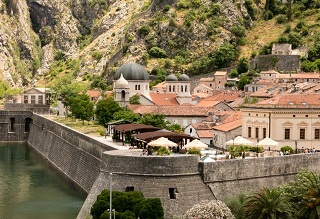
Kotor at a glance
- Location: on the coast of the Bay of Kotor, inside Kotor Bay.
- Main highlight: Kotor Old Town, protected by UNESCO.
- Visiting format: the historic center is fully pedestrian.
- Population: around 13,000 residents.
- From Budva: about 23–25 km, roughly 30–35 minutes on the road.
- What to see: cathedrals, churches, city gates, fortifications, palaces, squares and panoramic bay views.
Above the city rises Lovćen, the mountain that frames Kotor’s dramatic setting. From higher viewpoints, the bay and the old stone roofs look especially impressive. Kotor itself is compact, yet its port welcomes around 500,000 cruise visitors each year.
Kotor Old Town: why it should be your first stop
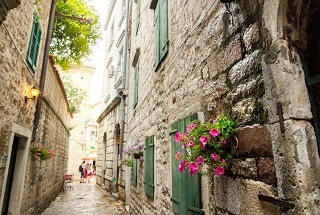
The Old Town is the main reason travelers come here. Cars are not allowed inside, so the visit turns into a relaxed walk through narrow lanes, stairways, hidden courtyards, churches and small squares enclosed by mighty defensive walls.
Kotor was built with protection in mind. The historic core has a triangular layout and three main entrances. The Sea Gate recalls the time when water reached the walls and access was possible by boat. The northern entrance once crossed the Škurda River by drawbridge, while the slopes of Lovćen shielded the western side.
The city walls stretch for up to 2.5 km, reach up to 6 meters in thickness and rise as high as 25 meters. These fortifications helped Kotor withstand attacks for centuries and remain one of the city’s most recognizable landmarks today.
What to see in Kotor
A practical walking route through the Old Town: Cathedral of Saint Tryphon, Church of Saint Nicholas, Church of Saint Luke, the Arms Square, Saint John Fortress, Saint Mary of the River, Our Lady of Health, the city gates, noble palaces and the Maritime Museum.
Main attractions in Kotor Old Town
Cathedral of Saint Tryphon
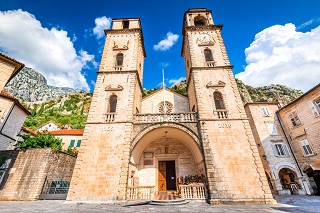
The Cathedral of Saint Tryphon is the city’s principal Catholic church and one of Kotor’s most important monuments. It dates back to 1166. The façade and bell towers were badly damaged by earthquakes in the 17th century and later rebuilt.
The cathedral keeps the relics of Saint Tryphon. Inside, visitors can see old frescoes, arches and the sacristy on the upper level. Admission to the cathedral and sacristy is 3.5 euros per person. To understand the story behind the relics and the church itself, it is especially rewarding to explore Kotor with a guide.
Church of Saint Nicholas
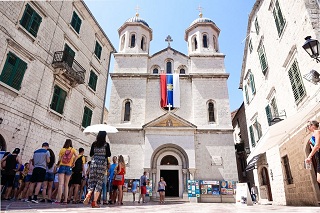
Before the 19th century, a Benedictine church stood on this square, but it later burned down. In its place, the Church of Saint Nicholas was built between 1902 and 1909.
This Orthodox church was designed to blend naturally into the historic surroundings. Its appearance combines late Gothic and Renaissance features. Today, it houses valuable old icons, including the revered “Three-Handed” icon.
Church of Saint Luke
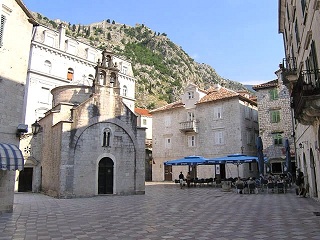
The Church of Saint Luke, built in 1195, has preserved much of its original appearance. For centuries it was connected to both Catholic and Orthodox traditions, which makes it one of the most interesting sacred sites in Kotor.
Until the 17th century, the church had two altars, one Catholic and one Orthodox. Later only the Orthodox altar remained, executed in Greek style. Stone burial slabs with Roman numerals are still visible on the floor, and relics associated with Saint Luke are kept inside.
Arms Square
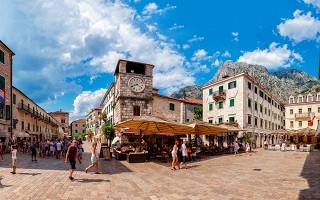
Arms Square is the largest square in Kotor and one of the liveliest places in the Old Town. The Clock Tower, built in 1602, stands here, and nearby you can still see the old pillar of shame once used for public punishment.
Today the square is lined with souvenir shops, cafés and small restaurants. It is also home to the first theater in Montenegro, dating from 1806–1809, as well as other historic civic buildings.
Saint John Fortress and church
According to legend, the original fortress was founded by Justinian in the 6th century. It was rebuilt many times and reached its final form in the 15th century. This is the highest point above Kotor and one of the best viewpoints in the bay.
The climb follows a winding staircase of about 1,400 steps and usually takes around one hour. In summer, entrance costs 5 euros per person. From the top, the panorama over the bay and the Old Town is one of the finest in Montenegro.
Saint Mary of the River
This church was built at the beginning of the 13th century on the site of an earlier 6th-century basilica. It was rebuilt several times after earthquakes, especially in its northern section.
Locals also know it as the church of Blessed Ozana. Her relics are kept near the entrance on the left side. Visitors can still notice fragments of old frescoes and decorative doors that tell the story of her life and the city.
Our Lady of Health
This 15th-century church stands on the mountainside above Kotor. It was dedicated to the Virgin Mary, whom locals believed protected the city from plague.
The church lies roughly halfway up the route to Saint John Fortress. There is a viewpoint nearby, and inside you can see old icons and a marble altar.
City gates and palaces
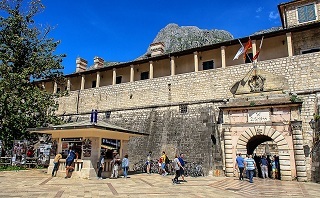
The Old Town has three entrances. The River Gate commemorates the citizens’ victory over Barbarossa. The Gurdic Gate is linked to the city and fortress by a drawbridge. The Sea Gate, built from massive 16th-century stone blocks, is decorated with a relief of saints and the Virgin with Child.
Kotor has preserved 17 palaces that once belonged to noble families. Among the best known are the Drago, Beskuća, Pima, Grubonja and Bizanti palaces. The Grgurina Palace now houses the Maritime Museum, while the wall of the Beskuća Palace features a mysterious relief connected with the Bizanti family.
Video of Kotor Old Town
This video gives a good sense of Kotor’s stone streets, squares and historic atmosphere before your visit.
How to get to Kotor
Kotor lies in the southeastern part of the bay. It is about 90 km from Podgorica. From Budva, the trip usually takes around 25–35 minutes depending on traffic and transport.
You can travel independently by car, take a bus, book a taxi transfer, or choose a longer sightseeing route that includes stops in other towns.
Budva – Kotor: the distance is about 25 km. Estimated travel time is around 35 minutes. By bus, the journey takes about 30 minutes, and a one-way ticket costs 8 euros per person.
Budva – Kotor route on the map
 Budva
Budva
Route distance Budva (ME) – Kotor (ME): about 25 km.
Estimated travel time: about 35 minutes.
 Kotor
Kotor
Kotor on the map with the Old Town marked
Below is a map showing the location of Kotor Old Town. It helps you understand where the historic center sits in relation to the bay before you start your walk.
Bus, transfer, car or organized tour
Buses to Kotor run from the main stations of different Montenegrin towns. From the bus station, it is about a 10-minute walk to the Old Town. From Budva, a one-way ticket costs 8 euros; from Tivat, 4 euros, with a distance of about 7 km.
There are no regular direct buses from Tivat Airport or Podgorica Airport to Kotor, so in that case a private transfer is often the most convenient option. Car rental, according to the source estimate, comes to roughly 65 euros for the rental itself, plus 20–40 euros for fuel and 10–15 euros for parking.
.jpg "City square")
Comparison of ways to get to Kotor
| Option | What to know | Best for |
|---|---|---|
| Bus | From Budva — 8 euros, about 30 minutes. From Tivat — 4 euros. From the bus station to the Old Town it is about a 10-minute walk. | Travelers who want an affordable independent trip. |
| Taxi transfer | Fast and convenient; fixed rates are available. | Those arriving from the airport or avoiding connections. |
| Car rental | About 105 euros total: rental, fuel and parking. | Visitors who prefer flexibility and do not mind parking costs. |
| Excursion route | Lets you combine Kotor with other places in the bay or with Cetinje. | Those who want to see more in one day and travel with a guide. |
Kotor tours: which routes include the Old Town
Kotor is included in several popular Montenegro programs, which is convenient if you want to combine the Old Town with other highlights of the bay.
Bay of Kotor tour
The route around the Bay of Kotor includes a visit to Kotor, a boat trip across the bay, Perast, the Our Lady of the Rocks island, Tivat and the Blue Cave. Price — 55 euros.
Evening Bay of Kotor
The evening bay trip also includes Kotor. Price — 45 euros.
Heart of Montenegro
The Heart of Montenegro program combines Kotor with Cetinje, the old royal capital. Price — 75 euros per person.
How to choose the right format
If you only need transportation, a transfer is the simplest solution. If you want to see Kotor together with the bay and nearby towns, a ready-made excursion is often more convenient. You can also compare group tours, private tours and other routes across Montenegro.
Tour options in Kotor
Book a transfer
Reviews of Kotor and day trips
Kotor leaves a strong impression on most visitors. The stone streets, old houses, palaces and walls create the feeling of a living medieval city rather than an open-air museum.
In summer, the Old Town can be crowded and the stone surfaces heat up quickly, so it is best to come early in the morning or later in the afternoon. Even with these practical nuances, Kotor remains one of the most memorable places in Montenegro thanks to its architecture, scenery and atmosphere.
FAQ: common questions about Kotor
What should I see first in Kotor?
Start with the Old Town: Saint Tryphon Cathedral, Saint Luke’s Church, Saint Nicholas Church, Arms Square, the city gates and the palaces. If you have enough time and energy, continue up to Saint John Fortress.
Can I drive into Kotor Old Town?
No. The entire Old Town is pedestrian-only, so you need to leave your car outside the historic center.
How much is the entrance to Saint Tryphon Cathedral?
Admission to the cathedral and sacristy is 3.5 euros per person.
How long does the climb to Saint John Fortress take?
The ascent takes about one hour and includes around 1,400 steps. In summer, the entrance fee is 5 euros per person.
How do I get from Budva to Kotor?
The distance is about 25 km. By bus, the trip takes around 30 minutes, and a one-way ticket costs 8 euros.
Which excursions include Kotor?
Kotor is part of the Bay of Kotor, Evening Bay of Kotor and Heart of Montenegro programs.
Expert guide and commercial travel overview from a local operator
How to choose, where to book and what to check before reserving excursions in Montenegro.
- Author: OLIMPUS.me editorial team
- Verified by: local excursion specialist at OLIMPUS.me
- Updated: June 10, 2026
- Topics: Kotor, Kotor Old Town, Kotor attractions, Bay of Kotor, road from Budva, Tivat and Podgorica, bus, transfer, excursion routes, tourist reviews.
