Perast in Montenegro: what to see, islands, palaces and how to get there
Perast is one of Montenegro’s most atmospheric historic towns. Fewer than 400 people live here, yet this small waterfront settlement preserves noble family palaces, old churches, maritime landmarks and postcard views of the islands of the Bay of Kotor.
.jpg "Perast")
Perast at a glance
- The town stands on the Montenegro coast, on the Adriatic and the Bay of Kotor.
- Perast has one main road for cars and a pier for boats and yachts.
- Its architecture combines clear Baroque and Gothic features.
- The town preserves 17 palaces of noble families and more than 15 churches.
- The main highlights are the islands, churches, palaces and the Maritime Museum.
Although compact, Perast is rich in history. It is often called the town of captains and sailors, and that maritime spirit is visible everywhere: in the stone facades, family residences and the setting right on the bay.
See the bay route or choose a private trip with a personal guide if you want to explore Perast together with other iconic places in the area.
The town of captains and sailors
From the 12th to the 17th century, seafaring flourished in Perast and across the Bay of Kotor, including nearby Tivat and Herceg Novi. Many famous captains and sailors of the Adriatic fleet came from this region.
During the Venetian Republic, from 1420 to 1797, Perast developed strong trade and military ties through its fleet. Economic growth and Venetian privileges turned the town into an important center on the Montenegrin coast.
What to see in Perast
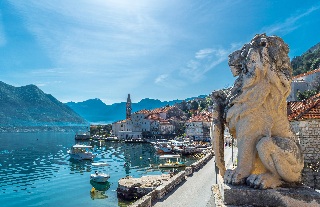
For such a small town, Perast offers an impressive concentration of heritage. Visitors can admire 17 aristocratic palaces and over 15 churches. Not every church is open to tourists, but even a simple walk along the embankment reveals a remarkable collection of religious and architectural monuments. Perast is also part of the wider legacy of churches and monasteries of Montenegro.
Best places to start with
- Our Lady of the Rocks island and church.
- St. George Island, also called Sveti Đorđe.
- St. Nicholas Church.
- Church of the Nativity of the Virgin.
- Monastery and Church of St. Anthony.
- Church of St. John the Baptist.
- Church of St. Mark.
- Fortress of the Holy Cross.
- Church of St. Anne.
- The noble family palaces.
- The Maritime Museum in the Bujović Palace.
Islands near Perast
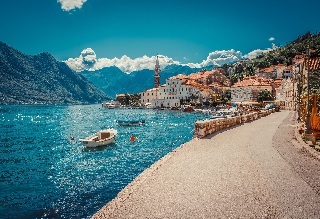
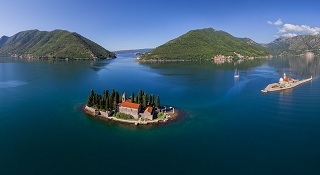
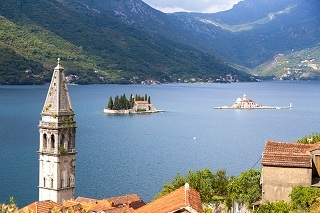
The islands are the most recognizable symbol of Perast. Just offshore you will see Our Lady of the Rocks and St. George Island. They are clearly visible from the waterfront and often become the main reason travelers come here.
Our Lady of the Rocks island and church
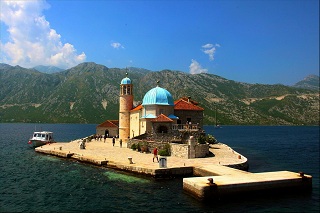
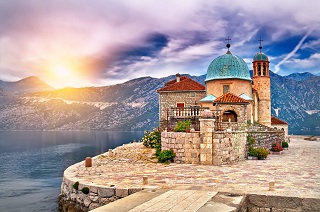
Our Lady of the Rocks, also known as Gospa od Škrpjela, is an artificial island. According to local history, the people of Perast created it over about 200 years by sinking old ships, stones and building material on a small reef.
Today the island is home to the Church of the Mother of God. Many excursions through the Bay of Kotor include a stop here, and there is also an evening version of the route.
St. George Island
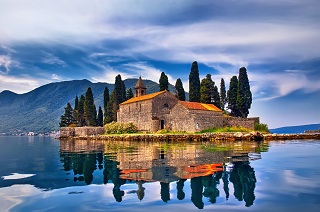
St. George Island, or Sveti Đorđe, is sometimes called the island of the dead. Tourists are not allowed to go ashore, but you can rent a boat and circle the island from the water.
The islet is home to a Benedictine abbey and a closed male monastery. Tall cypress trees and a stone church give it a dramatic and memorable silhouette.
Churches and temples of Perast
Most of Perast’s churches were built in the 17th and 18th centuries. Some can be visited inside, while others are best appreciated from the outside during a walk through town.
St. Nicholas Church
St. Nicholas Church is the symbol of Perast and its main temple. The interior features frescoes by Tripo Kokolja. Its 55-meter bell tower, built at the end of the 17th century, was once the tallest structure in the Southern Balkans.
The church stands on the central square and dates from the period when the Venetians were freed from Turkish rule.
Church of the Nativity of the Virgin
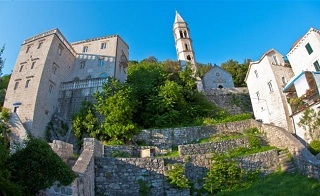
This is the only Orthodox church in Perast. Built in the Baroque style, it is hidden among houses and can be difficult to find on your own. Historically, this was the church for Orthodox parishioners, while the rest of the town’s churches were Catholic.
Monastery and Church of St. Anthony
The monastery and church of St. Anthony were part of a Franciscan complex. The monks played an active role in town life and helped care for sick residents.
Church of St. John the Baptist
This church is known as the place where ordinary townspeople could once attend services. It was built at the turn of the 16th and 17th centuries. Its unusual two-story bell tower is considered unique.
Church of St. Mark
St. Mark’s Church stands on the waterfront. In the past, noble citizens were buried beneath it. The church was associated with wealthy residents and was built with funds from the Venetian patron Stukanović.
Fortress of the Holy Cross
The fortress takes its name from an ancient church that was built and destroyed in the early Middle Ages. The fort itself appeared much later on the site of the old Church of the Cross.
Church of St. Anne
Inside St. Anne’s Church are frescoes by Tripo Kokolja, often described as a renowned Italian painter in Montenegro.
Palaces of Perast
Most of Perast’s palaces were built at the turn of the 17th and 18th centuries, which is why Baroque architecture dominates the townscape. For a place of this size, the number of noble residences is truly impressive.
The stories of local families, captains and palace owners become much clearer with the help of a guide, so many travelers prefer to turn to a guide in Montenegro.
Balović Palace
This palace looks elegant and restrained. It includes a structure for collecting fresh water. The Balović family was closely connected with the sea, trade and military service.
The palace is also known as the place where Njegoš, buried on Lovćen, wrote his famous poetry.
Brajković-Martinović Palace
Its delicate balconies give the building a light and airy appearance. The palace is associated with Marko Martinović, a well-known historical figure in Montenegro who established ties with Russia during the reign of Peter I and taught navigation to Russian cadets and noble children.
Bronza Palace
The Bronza family fought pirates and earned the respect of both Perast residents and the Venetian authorities, receiving a knighthood in return. Locals also call the building “dogana,” meaning customs house, because from the 19th century it belonged to tax collectors.
Bujović Palace
Bujović Palace is considered one of the most interesting historic buildings in the area. Its stone was once part of the walls of Herceg Novi, when that town belonged to the Ottoman Empire.
Visković Palace
The Visković family was one of the oldest and most respected in Perast. Their palace is considered the town’s oldest castle. The first part to be built was a tower in the early 16th century, and later additions turned it into part of the wider urban defense system.
Šestokrilović Palace
One of the oldest families in Perast owned this modest but well-preserved palace. Today it is regarded as a masterpiece of 16th-century architecture and still serves as a residential building.
Zmajević Palace
Zmajević Palace is often called the bishop’s house because the family produced two bishops. It is one of the largest buildings in Perast and stands dramatically on a steep rock above the bay.
Lučić Palace
The Lučić Palace now houses a modern hotel, but from the outside it still retains the appearance of a historic architectural monument.
Mazarović Palace
Mazarović Palace is a vivid example of Baroque architecture and stands not far from the coast.
Smekja Palace
Smekja Palace is the largest palace in Perast. It once belonged to one of the wealthiest families in Montenegro, whose representatives opened a maritime route to the Baltic Sea.
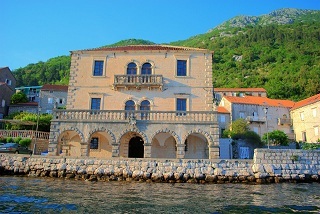
Maritime Museum
The local museum collection deserves special attention. The Maritime Museum was founded in 1937 and later moved to Bujović Palace, where visitors can still see it today.
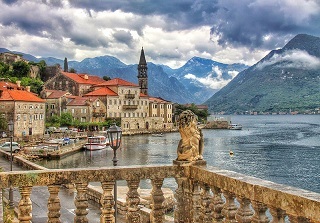
Tourist reviews
Travelers usually speak about Perast with real enthusiasm. It is regularly included among the top attractions in Montenegro thanks to its bright stone architecture, cozy waterfront and medieval atmosphere.
If you want to read impressions before planning your trip, separate pages collect general tourist reviews, opinions on the “Heart of Montenegro” route, reviews of the Bay of Kotor trip and reviews of the evening bay route.
Perast on the map of Montenegro
The exact location of Perast is 42°29′13″ north latitude and 18°41′57″ east longitude. The town was built on the shore of the Bay of Kotor.
Above the town rises the hill of St. Elijah. Perast stands on a small cape projecting into the Risan Bay, one of the narrowest parts of the bay opposite the Verige Strait. Administratively, it belongs to Kotor Municipality and lies no more than 15 km from Kotor.
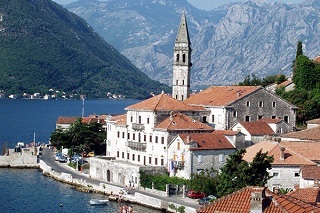
How to get to Perast
From Kotor
The easiest way is from Kotor. The drive takes about 20 minutes, and the distance is no more than 15 km.
From Budva
The route from Budva to Perast is about 35 km. Travel time is usually around 50–60 minutes, but in high season traffic jams are possible, especially near Kotor, so the journey may take longer.
 Budva
Budva
Distance on the Budva (ME) — Perast (ME) route: ~ 35 km,
approximate travel time: ~ 55 min.
 Perast
On your own, by transfer or with a guide
You can reach Perast by bus from the bus station of almost any town, or book a taxi transfer.
Another option is an organized trip: a group format or an individual trip with a personal guide.
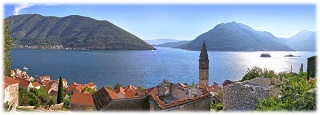
Routes that include Perast or Our Lady of the Rocks
Perast appears in several excursion programs. Before booking, it is best to check current prices and conditions on the page of the selected route.
“Heart of Montenegro”
Perast is included in the “Heart of Montenegro” itinerary.
“Bay of Kotor”
The route through the Bay of Kotor passes by Perast and includes a stop at Our Lady of the Rocks. In this format, the town itself is viewed from the sea.
Evening bay route
The evening program follows a similar route and also stops at Our Lady of the Rocks.
Comparison of ways to visit Perast
| Option | Best for | What to know |
|---|---|---|
| Bus | Travelers who want to get there independently and walk around the town. | You can travel to Perast from the bus station of almost any town. |
| Taxi transfer | Those who need a direct ride without an excursion program. | A separate transfer option is available. |
| Group trip | Those who want to follow a route with a group and hear plenty of interesting information from a guide. | You can check group options. |
| Individual trip | Those who value a personal guide and a deeper story about the town. | Ideal for discovering the palaces, churches and history of Perast in detail. |
| Bay route | Those who want to see Perast from the water and visit Our Lady of the Rocks. | Bay of Kotor programs include a stop on the island. |
FAQ: common questions about Perast
What should you definitely see in Perast?
For a first visit, start with Our Lady of the Rocks, St. George Island, St. Nicholas Church, the old palaces and the Maritime Museum.
What is the town famous for?
Perast is known for its maritime history, captains of the Adriatic fleet, noble family palaces, churches and a mix of Baroque and Gothic architecture.
Which islands are near Perast?
The two famous islands are Our Lady of the Rocks, also called Gospa od Škrpjela, and St. George Island, sometimes referred to as the island of the dead.
Can you visit St. George Island?
No, tourists are not allowed to enter. The island can only be viewed from the water by boat.
Where is Perast located?
Perast lies on the shore of the Bay of Kotor in Kotor Municipality, less than 15 km from Kotor.
How do you get from Kotor to Perast?
The trip from Kotor takes about 20 minutes by bus or taxi.
How do you get there from Budva?
The Budva–Perast distance is about 35 km. The map shows roughly 55 minutes of travel time, and you can go by taxi or bus.
Which excursions include Perast?
Perast is part of the “Heart of Montenegro” route, the Bay of Kotor route and the evening bay route. The last two include a stop at Our Lady of the Rocks.
You can visit Perast independently, arrive by transfer or include it in a guided trip. If you want not only to see the town but also to understand the stories behind its palaces, churches and islands, it is worth choosing the right format in advance.
Private excursions and organized bay routes are especially convenient for travelers who want to combine Perast with other highlights of Montenegro in one day.
Expert guide and commercial travel overview from a local operator
An expert guide and practical travel overview from a local operator: how to choose, where to book and what to check before reserving excursions in Montenegro.
- Author: OLIMPUS.me editorial team
- Checked by: local excursion specialist at OLIMPUS.me
- Updated: 04.06.2026
- Topics: Perast, Bay of Kotor, Our Lady of the Rocks, St. George Island, churches and palaces of Perast, Maritime Museum, road from Kotor and Budva, tourist reviews, routes around Montenegro, group and individual trips, taxi transfer.
